
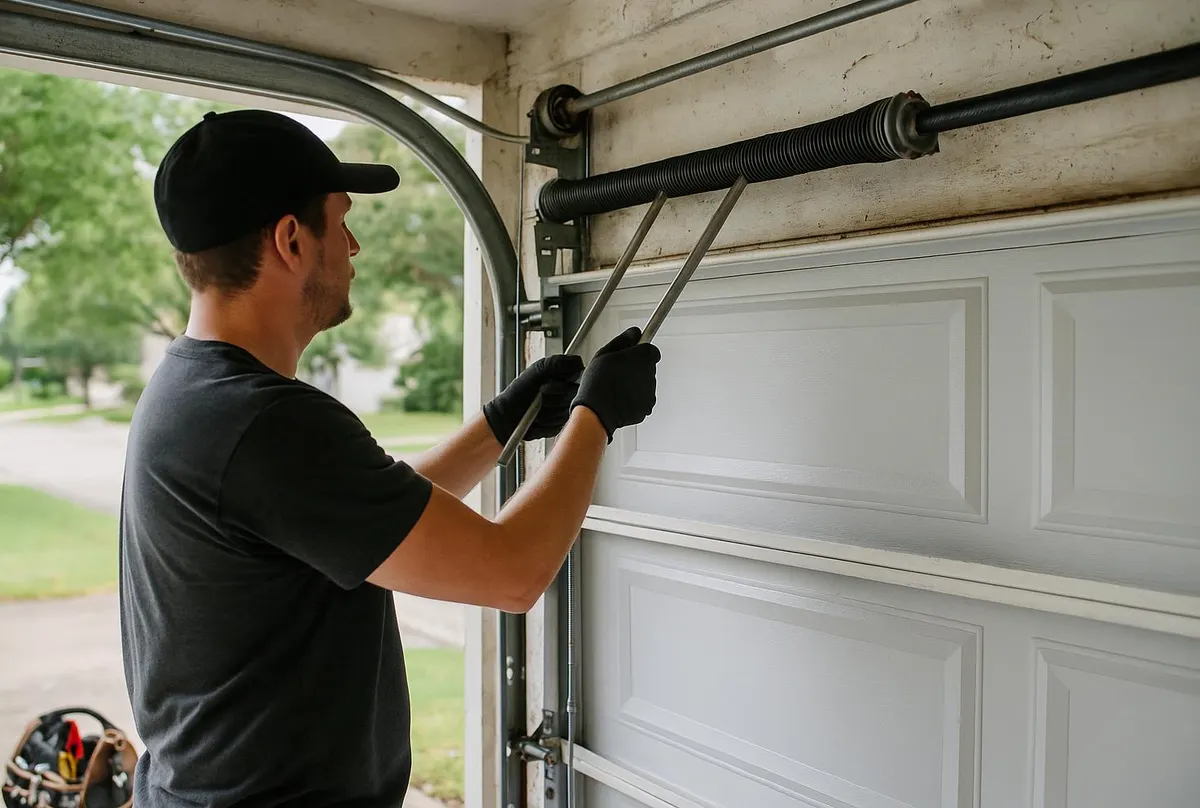
What a Technician Sees on a Typical Fall Service Call
By late October, the calls start to shift. All summer and early fall, it's dust-clogged tracks and sun-baked weatherstripping cracking in the heat. Once the first rain hits, it's a different story: water pooling under the door, a spring that suddenly sounds different, an opener that won't close all the way because a sensor got splashed. Most of these issues trace back to the same cause — a garage door that coasted through a long, dry season without much attention, then got hit with moisture, temperature swings, and heavier use all at once as everyone starts parking inside more and running errands in the rain.
None of this is complicated to prevent. It just means doing a handful of checks now, before the first real storm, instead of after.
Check the Weatherstripping and Bottom Seal
After a dry summer, rubber seals around the garage door often shrink, crack, or pull away from the frame. This is the single biggest source of water intrusion once winter rain starts. Run your hand along the bottom seal and side weatherstripping — if it feels brittle, flattened, or you can see daylight through gaps, it's time to replace it. Bottom seals are inexpensive and straightforward to swap out, and doing it now means you're not dealing with water pooling into the garage during the first downpour of the season.
While you're at it, check where the door meets the slab. Garages built with a slight slope away from the opening handle rain fine; garages where the slab has settled or cracked over the years can let water seep in regardless of how good the seal is. If you're seeing standing water inside after rain even with a good seal, that's a grading or slab issue worth mentioning to a technician, since it affects what kind of seal or threshold will actually solve the problem.
Clean and Lubricate Before Rust Gets a Head Start
Dust and grit that built up in the tracks and rollers over a dry summer turn into a gritty paste the moment moisture shows up. That paste grinds down rollers, hinges, and bearings faster than clean metal ever would. Before the rain starts in earnest:
- Wipe down the tracks with a damp cloth to clear out dust and debris.
- Apply a silicone-based lubricant to rollers, hinges, and the torsion spring — avoid WD-40 or heavy grease, which attract more dust and gum up over time.
- Check for surface rust on hardware, especially if your garage faces prevailing winds or sits closer to the coast where salt air accelerates corrosion. Light rust can be wiped and treated now; heavier rust on springs or cables is a sign those parts are nearing the end of their service life.
This is also a good time to look at any exposed metal brackets or hardware tied to earthquake retrofits. Retrofit kits and reinforced door frames are common in this area, and the connecting hardware benefits from the same rust check as the rest of the door.
Test the Spring Balance
Temperature swings between cool, damp mornings and warmer afternoons cause metal to expand and contract, which can shift spring tension over time. A door that was balanced fine in September might start to feel heavier or lighter by December. Disconnect the opener and lift the door manually about halfway — it should stay in place on its own. If it drifts down or shoots up, the spring tension is off, and that's not a DIY adjustment. Torsion springs are under enough load to cause serious injury if mishandled, so this is one to flag for a professional rather than attempt yourself.
Check the Opener and Safety Sensors
Shorter days mean the opener gets used more often in low light, and rain can splash onto the photo-eye sensors near the bottom of the track, causing the door to reverse unexpectedly or refuse to close. Wipe both sensors clean, make sure they're aligned (the indicator lights on most openers will blink if they're not), and confirm the door closes fully without bouncing back. If you notice the door reversing for no obvious reason once it starts raining, sensor misalignment or moisture on the lenses is usually the first thing to check.
It's also worth testing the manual release and backup battery, if your opener has one. Winter storms occasionally mean power blips, and knowing the manual release works smoothly means you're not stuck if the power goes out while the car's in the garage.
A Note on Insulation
Inland pockets around Escondido can get genuinely cold on winter mornings, especially compared to the coast. If your garage connects to living space or you use it as a workshop, an insulated door or add-on insulation kit makes a noticeable difference in keeping that space usable through the colder months, and it also cuts down on condensation forming on the inside of an uninsulated metal door.
When to Call Escondido Garage Door Pro
Some of this is fine to handle yourself — wiping sensors, clearing tracks, swabbing in some lubricant. But if the door is unbalanced, the springs look worn or rusted, or you're getting water intrusion even after replacing the seal, those call for a trained eye. Our Preventive Maintenance visits cover a full inspection of springs, cables, rollers, and seals, and we'll flag anything that's close to failing before it does. If we find a spring that's past its service life, our Spring Replacement service gets it swapped out safely and the door rebalanced the same visit.
If winter weather catches you off guard with a door that won't close or a sensor that's acting up, our Emergency Garage Door Service is there for exactly that kind of call.
If you're anywhere in Escondido, San Marcos, Valley Center, Rancho Bernardo, Poway, Vista, Fallbrook, or Ramona and want your garage door checked before the rain settles in, give Escondido Garage Door Pro a call. We'll have it sealed up, balanced, and ready for the season.