
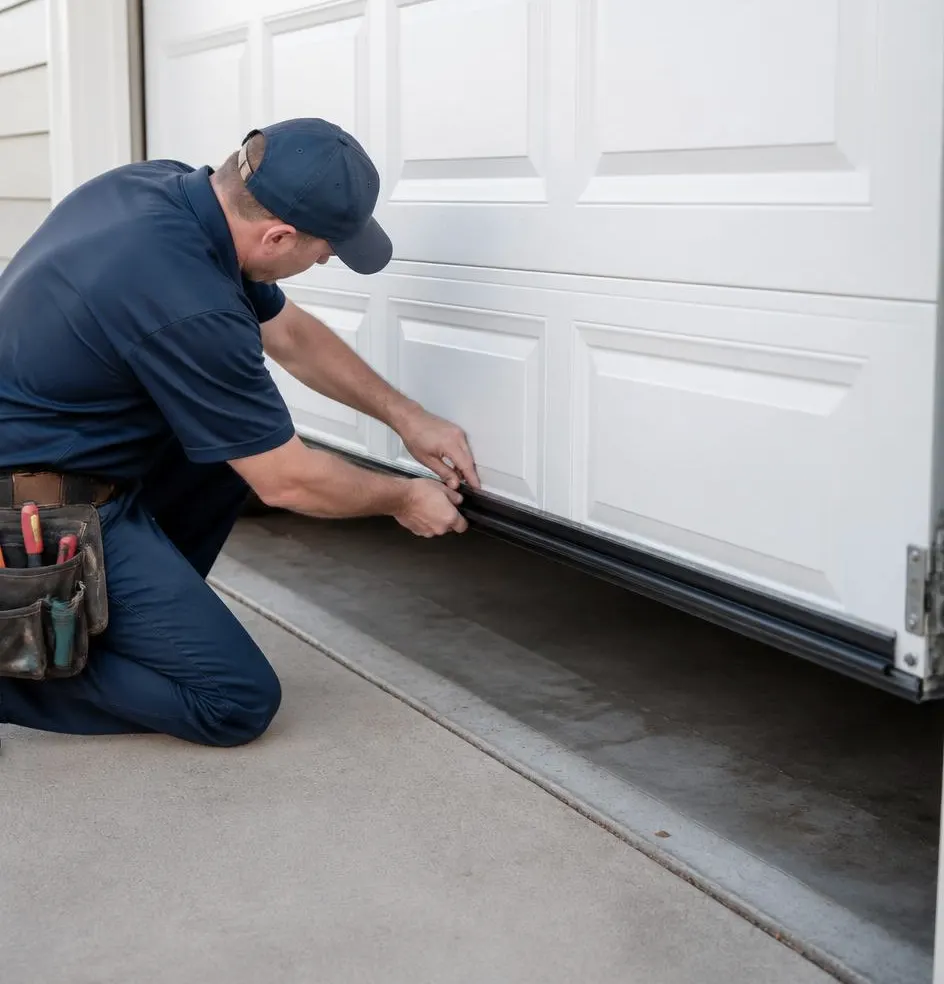
What a Technician Sees After a Windy Night
A typical call after a rough wind event looks like this: the homeowner walks out to find the garage door bowed outward between the panels, a roller popped out of the track, or the door sitting crooked because one hinge took the brunt of the gust. Sometimes it's less dramatic but just as telling — a thin line of dust or water under the door that wasn't there before, a sign the seal gave way under pressure. None of this is random. Garage doors are large, lightweight, and mounted on a track system that was never designed to fight sustained wind pressure on its own.
Why the Garage Door Is a Home's Weakest Wall
Every other wall in a house is a solid, continuous structure tied into the framing. The garage door is the opposite: a wide opening covered by a panel that moves, held in place by springs, rollers, and a relatively thin track. When wind pushes against a garage door, that pressure has nowhere to distribute the way it would across a braced wall. The door flexes, the track takes the load, and if the wind is strong enough or comes in sharp gusts, something gives — a bent track, a torn seal, a door that pops off its rollers entirely. In homes built before certain wind-resistance standards existed, this is even more of a risk, since the original door and hardware may never have been rated for sustained high-wind exposure in the first place.
This matters more here than people expect. Inland neighborhoods get genuinely strong, dry wind events in the cooler months, and homes closer to the coast deal with salt air that quietly corrodes hardware over time, weakening the very parts that are supposed to hold the door steady when wind picks up.
Getting Ready for Santa Ana Winds and Winter Storms
Fall and winter in this part of California bring two distinct wind risks: dry, fast Santa Ana-style wind events that kick up dust and wildfire smoke, and winter storm systems that bring sustained rain and gusty wind together. Both put real stress on a garage door, just in different ways. Dry wind tests the door's structural integrity and seals; wet wind tests those same seals plus the door's ability to keep water out.
Inspect Rollers, Tracks, and Hardware
- Check that tracks are firmly bolted to the wall and not pulling away at any mounting point.
- Look for rollers that are worn, cracked, or not seated properly in the track — these are the first thing to fail under wind pressure.
- Tighten any loose hinges, brackets, or bolts along the door's framing. Loose hardware means more flex, and flex under high wind is how doors get pulled off track.
Check Weatherstripping and Bottom Seals
The rubber seal along the bottom of the door and the weatherstripping around the sides are the first line of defense against wind-driven rain. If they're cracked, flattened, or pulling away from the door, replace them before the rainy season sets in. A worn seal doesn't just let in water — it also lets in dust during dry, windy stretches, which is its own headache for anything stored in the garage.
Reinforce an Older or Lightweight Door
If the door is older, lightweight, or has visibly thin panels, retrofitting it with horizontal bracing can make a meaningful difference in how it holds up under sustained wind pressure. This is the same logic behind earthquake retrofits that are common in this area — reinforcing a structural weak point before it's tested, rather than after. A braced door distributes wind load more evenly across the panel instead of concentrating stress at the center.
Test the Balance and the Springs
A door that's out of balance puts uneven strain on the opener and the track, which becomes a bigger problem the moment wind adds extra force to the equation. Disconnect the opener and lift the door manually halfway — it should stay in place on its own. If it drifts up or falls, the springs are compensating poorly and should be looked at before storm season, not during it.
Plan for Power Outages
Winter storms here often come with power interruptions. If the opener doesn't have a battery backup, manual release is the only way in or out during an outage, which matters if the garage is a primary entry point. A battery backup unit keeps the door functional when the power drops mid-storm.
When to Call Escondido Garage Door Pro
If the door is already showing signs of wind damage — a bent track, a panel that's started to bow, a seal that's torn through — that's a job for garage door repair rather than a DIY fix, since misjudging spring tension or track alignment can turn a small issue into a door that comes off its rails. If the inspection turns up springs that are rusted, stretched, or clearly out of balance, spring replacement before the windy season hits is far better than dealing with a snapped spring during a storm. And if the door itself is old, thin-paneled, or was never built with wind resistance in mind, it may be worth talking through installation of a sturdier, better-sealed door rather than continuing to patch an aging one. Whether it's a quick fix or a full reinforcement job, we show up, diagnose what's actually going on, and get it handled before the next storm tests it for you.
If you're in Escondido, San Marcos, Valley Center, Rancho Bernardo, Poway, Vista, Fallbrook, or Ramona and want your garage door checked before the wind picks up this season, call Escondido Garage Door Pro today.